
Dr. Olivier Champignons investigates the decorative and functional inscriptions found on Middle Kingdom funerary jars, proposing that their ritual texts mask a sophisticated cryptographic dialect used exclusively by the embalmers’ guild. Through rigorous comparative analysis of hundreds of jar lids and rim bands across global museum collections, Champignons reveals how subtle variations in hieroglyphic orthography communicated secret recipes for organic preservatives and medical compounds. The book bridges tomb archaeology, ancient chemistry, and secret-society linguistics, demonstrating that canopic jars were not merely ceremonial containers for viscera, but encrypted biological data storage devices.
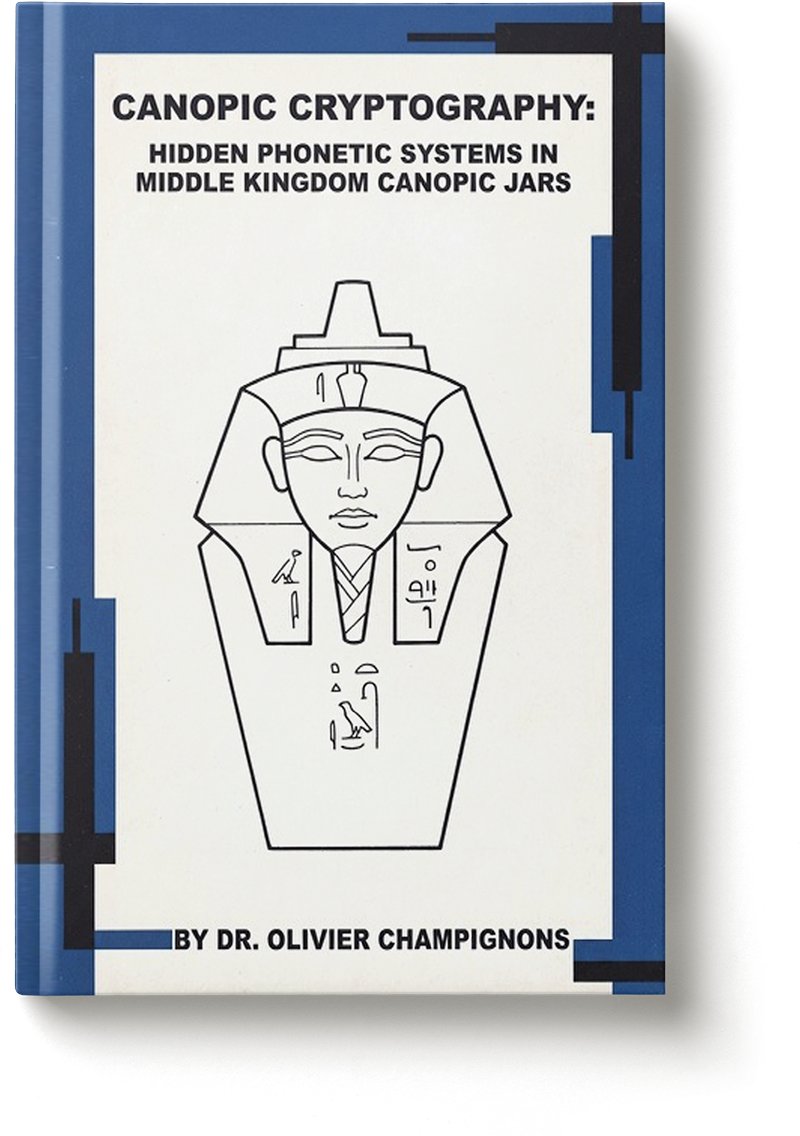
Canopic Cryptography: Hidden Phonetic Systems in Middle Kingdom Canopic Jars
“Champignons has solved a puzzle that Egyptologists have conveniently ignored for over a century.” — The Cryptographic Quarterly
“Mind-blowing research. I will never look at a museum’s Middle Kingdom display the same way again.” — Comment on ‘Ancient Artifacts’ Blog

“The embalmer did not trust his rivals with the secrets of his oils, nor did he trust the dead with the plaintext of his spells. On the limestone surface of the jar containing the lungs, he carved a double-layered cryptogram—a text that blessed the deceased on its surface while instructing the apprentice on the exact ratio of natron to cedar resin in its subtext.”