In this provocative sociological and medical study, Dr. Champignons examines isolated human settlements—from remote alpine monasteries to off-grid desert communes—to analyze how social isolation alters bacterial mutation rates. The author demonstrates that when human populations self-isolate from the global genetic pool, their endemic microflora undergoes a parallel drift, giving rise to unique, hyper-localized “sovereign pathogens.” Champignons combines field interviews with clinical lab samples gathered across four continents to illustrate the terrifying speed of localized viral adaptation. The book traces several obscure historical panics back to small, tightly-knit communities whose internal linguistic and biological insularity created the perfect incubator for novel diseases. It offers a chilling warning about the biological risks inherent in modern ideological isolationism.
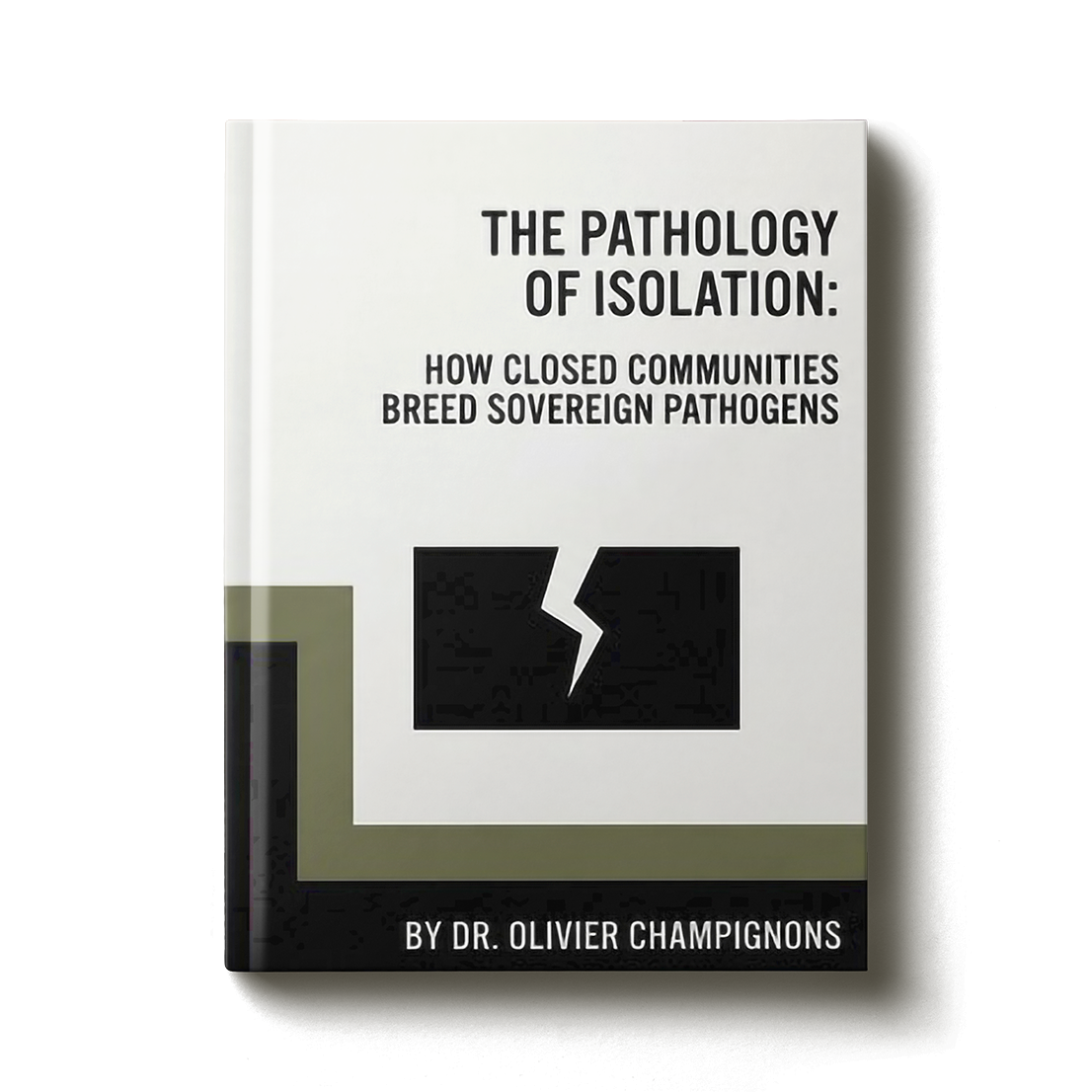
The Pathology of Isolation: How Closed Communities Breed Sovereign Pathogens
“Champignons proves that insularity is not just a political choice, but a biological hazard of the highest order.” — The Alpine Journal of Anthropology
“Part medical thriller, part sociological warning. Unputdownable.” — Comment from @virology_daily on X

“When a valley closes its borders to the outside world, its language shrinks, its customs curdle, and its bacteria begin to rule. In the absence of genetic exchange with the wider world, the local microflora ceases to negotiate with human immune systems and begins, instead, to dictate terms. The sovereign pathogen is born not of malice, but of absolute solitude.”